Saturday, 30 November 2013

Friday, 29 November 2013

"I like to move it, move it"


On the Sports Day of an International School in Muscat, a child in Primary 5 reports:


With overcast clouds, it was a perfect setting for the sports day of the Milepost 2 section of our school. If the sun was out, it would have been too hot for us.

We all wore our PE t-shirts today and we looked so similar. We do not have a uniform at school. Our school believes in the children’s freedom to express their personality through clothes.

As we waved our red, green, blue and yellow team flags, supportive parents gathered around the sports field. There were mothers and fathers who had taken an hour or two off from work, women in veils, and even a grandma in a brilliant yellow saree.

The teachers led us to our respective groups and we had to participate in a variety of activities spread out over the field: high jumping, long jumping, javelin throws, and others. Each group had about two children from each team.

We had to change to a different activity when the music came on: I like to move it, move it!

The groups took turns in running around the sports field. That was the toughest bit. Our teachers and parents encouraged us as we ran past them. Maysa's mum ran with her when she got too tired. That was very sporty.

The fastest among our teams were pre-selected for sprinting.

When the time came for the certificates to be distributed, there were ready smiles on hot faces.

We all got certificates for participation although the blue team came first.

Miss Liz took pictures of the special achievers.

Nour’s baby sister waddled over and played on his lap as we sat with our team mates after the event. He lifted her up for the group photograph. We all thought that it was very cute to do so.


Thursday, 28 November 2013

Turkeys in Oman


Turkeys are rarely found in the Sultanate of Oman.

Just before Thanksgiving, some supermarkets stock these big birds for those who celebrate.

In our Brownies unit there are girls from several nationalities. Some are of mixed nationalities: half-Dutch, half-Indian, quarter-Irish, quarter-Australian. The girls are all working on their culture badges and many had not heard of Thanksgiving. Our leader, Terri Argument, who is from Canada, gave an interesting talk about this American-Canadian celebration.

The Brownies made colourful paper turkeys with wings made out of hand impressions. The girls stuck on the eyes, the noses, and the feet. Some of them put jackets, necklaces, crowns and bows on the turkeys.

At the end of the session, they had some beautiful feathered friends to take home. They also realised the importance of giving thanks to God for everything.
Happy Thanksgiving!

(The Brownies are a section of  Girlguiding which is a leading charity for girls and young women. For more information you may visit their website: http://www.girlguiding.org.uk/about_us.aspx )


Wednesday, 27 November 2013

To Vent or not to Vent


Friends, what do you do when you are really upset or angry or hurt?

Do you vent by talking to others?

Venting is letting off steam. Or any bad feelings.

Animals don’t vent, they fight.

Often, humans are not allowed to fight, so they ‘vent’ by talking it out.

Sometimes they talk to their close friends or to themselves.

Last week, a friend posted this on Facebook:


Okay, it is not always good to vent.

It has been observed that sometimes when you vent,
1)     Everybody comes to know of your misery
2)     Unwanted solutions are offered
3)     People hear you but don’t really listen (Not everybody has time, you see)
4)     It doesn’t always make you feel better
So, you may ask, what are the alternatives?
I asked around and found that friends have some brilliant alternatives.
1)     Go for a walk or a run
2)     Write it down and tear it up
3)     Write it down and give it to the offender (Warning: This sometimes sets off a chain reaction)
4)     Read
5)     Eat / Drink
6)     Yoga
7)     Dance
8)     Cry
9)     Watch cartoons or porn or travel videos or sermons (depending on the age group)
10)     Use a deadly tool – Silence
If all of the above don’t work, just tell your best friend/s.
Well, that leaves us in square one again, doesn’t it?
I turned to people in the past and the image of my Grandma Rosemary came to mind. We fondly called her Mamai.
Mamai was widowed in her early twenties. With three little children to look after, she worked as a day labourer on a farm. She lived for eighty years. I had never seen her vent and yet she was the epitome of peacefulness. Surely she had a secret technique.
I juggled my memory and remembered what she had once told me:
“My dear, always talk to God. He is your best friend. If you have problems, give them to Him and He will solve them. Once you give them to Him, you can live in peace.”


Tuesday, 26 November 2013

Serenity Prayer


God, grant me the serenity to accept the things I cannot change,
 
 
The courage to change the things I can,
 
 
And wisdom to know the difference.


Reinhold Niebuhr


Monday, 25 November 2013

The Wonders of Wahiba


To live in the desert is to befriend the elements.

It is to understand the language of nature – the majestic moods of the sun, the purposeful movements of clouds, the power of the wind, the etiquette and unwritten codes of lesser creatures, the positions of the multitudinous stars, and most importantly, the vast emptiness of the desert. Life is hard yet rewarding. The Bedouins have lived so for thousands of years. For them it is a way of life.

For people from other parts of the world, it is an adventure that brings them closer to themselves and encourages a better understanding of this world.

The famed Wahiba, also known as the Sharqiyah Sands of Oman, near the city of Muscat, are easily accessible by road. As we raced along the highway from Muscat towards the desert, with the sun blazing overhead, we left behind the urban comforts and within a couple of hours, entered an arid landscape dotted with green plantations and tiny hamlets. The road snaked through the imposing Al Hajar Mountains and at strategic locations opened up to a spectacular views. There were clear road directions beckoning us to follow the right way. Among the scant vegetation that we saw along the way, the only fellow creatures we saw for miles were the grazing herds of goats and camels.

There are two ways of exploring the desert sands: either camp in the open or book into the many commercial camps available. Both have their unique charms. If camping in the open, you need some training, a lot of equipment and perseverance. You need to deflate your tires once you are on the soft sands, hitch up your tents before sundown, lookout for midnight predators, stay clear from vehicle tracks or else some vehicles might surprise you by entering your tent in the middle of the night! You may also have to carry four boards and ropes to tow your vehicles, just in case. Among the many advantages of an open camping adventure is the challenge of travelling along “the road not taken”. Not to mention the rare pictures and amazing experiences. On the other hand, if you book into one of the commercial camps in the Wahiba, you can be assured of warm food, abundant water, air-conditioning, and a sense of security. One can relax, enjoy the Bedouin experience and be taken care of by the friendly staff.

As we neared the camp we had booked into, our young Omani tour guide wished us peace with the greeting - “As salaamu aleykum!” He helped us into his 4WD and zoomed off along the sandy path to reach the campsite 20 km away. We instinctively reached for our seatbelts only to realise that there weren’t any. That made the ride all the more exciting. The sand dunes shifted past us as we speeded through a cloud of golden dust. We passed by bones of unlucky goats which reminded us of how harsh and unforgiving the desert can be.

Once at the camp, we checked into our comfortable shacks lined with palm fronds. Along the way we had also passed some camps which had black and white tents made from goat hair. In the middle of the camp was the dining area enclosed by a bougainvillea trellis. We buried our feet in the cool soft sand on its floor as we sipped our welcome tea. The camp also had a large outdoor children’s play area with climbing frames and slides. The roaring quad bikes seemed to be the major attraction. Riding them was a macho adrenaline-boosting experience for people of all ages. We were led into a 4WD to do some dune bashing. In the absence of seatbelts, we bashed against each other as our guide bashed the vehicle against the hundred meter high dunes. Down, down, we went defying gravity in the soft sands as everybody screeched and laughed. And then it was time to go up and then down again several times. The sand dunes at Wahiba are stretched in the north-south direction so we were going perpendicular from east to west. “Dhabaki up and dhabaki down,” chorused the children. Roller coasters, we agreed, are much tamer than this. This was the real thing.

Afterwards, totally spent, we lazed on the warm sand. Someone tried sliding down the sand dunes and all of us joined in. It was pure childish fun. A middle-aged man slid face down and then started hunting for something frantically in the sand when he reached the base. When he found what he was searching for, he raised it up for all to see. It was his solid gold wedding ring. His wife of many years smiled and blew kisses to him as she sat on the top of the dune.

The sun, however, was the real hero of the moment. Through the day it had coloured the sand in different shades of honey, burgundy, golden, red, yellow, and white. As it slowly settled into the hammock of the soft sand dunes in the distance, it lighted up the landscape in such a magical light that people talked in hushed whispers as if to avoid breaking the magical spell that had been recently cast on them. From blazing yellow, the sun turned amber and then crimson just before pulling a purple cover and disappearing completely. Mesmerised by this drama, we lay on the sand dunes which gradually became cooler. As we competed to spot the first star in the sky, a strong wind blew the sand into our eyes and nostrils. Covering our faces and heads with our scarves and shawls like the Arabs do, we made our way to the safety of the camp again. We were also warned of the several venomous night creatures that the hour heralds.

This time we were greeted by an aroma of food. It was a simple fare of freshly cut salads, spiced rice and barbeque. After dinner, in the shaded majlis or sitting area, Omani cushions and carpets were neatly laid out and frankincense burned in strategic corners. Old Bedu men played traditional Omani music as the young men danced to the rhythmic beat and sang along. Perhaps they sang about the hard life in the desert, their history, or perhaps about love? Arabic language is quite ornamental and their love for poetry is well known.  Shisha (hookah) pipes were quietly passed around. When the musicians and dancers had bowed and retired later in the night, the guests enthusiastically took turns to sing and dance to music from their own cultures. This was greatly appreciated by the hospitable Omani staff.

When the lights around the camp went out at last, the moonless night sky dazzled with the stars. The desert sky is stunningly brilliant in the night. In the absence of any artificial lighting for miles around the camp, we were drawn back to ancient times when people looked for signs and messages in the sky. Instinctively people drew closer to each other and marvelled at the vastness of the universe and their own earthly existence. It was a treasured moment of our trip.

After an enlightened night of truth-seeking and peacefulness, we left the camp the next morning and took the road leading to Muscat and modern civilisation. The locals, as we noticed along the way, are always enthusiastic to meet tourists and offer hospitality. We passed by several wadis (dry river beds) and picturesque villages nestling among the hills of solid rock. We halted for some time at one of the wadis which had a cool green stream of clear water flowing over perfectly oblong smooth pebbles. Around the wadi was a vibrant growth of date palms and banana trees. In the heat of the sun, it seemed like a perfect paradise.

Next time, inshallah – god willing, we will go open camping.
 
(This post was first published in Outpost Muscat Newsletter, Nov-Dec 2013)


Sunday, 24 November 2013

The London Brunch


The best thing about living in Reading was its proximity to London.

Being a vibrant university town, Reading has its own attractions and we enjoyed them during the week.

On most weekends, however, we would go to the Reading Junction and board one of the many trains going to Paddington. From there we charted our way to the various tube stations depending on what we had planned for the day.

London made us feel overwhelmed by its crowds, tourists, and sights. With so many historical landmarks to explore, we didn’t seem to have enough hours in the day trip.

Add to that an austere budget and a toddler who ate only homemade food.

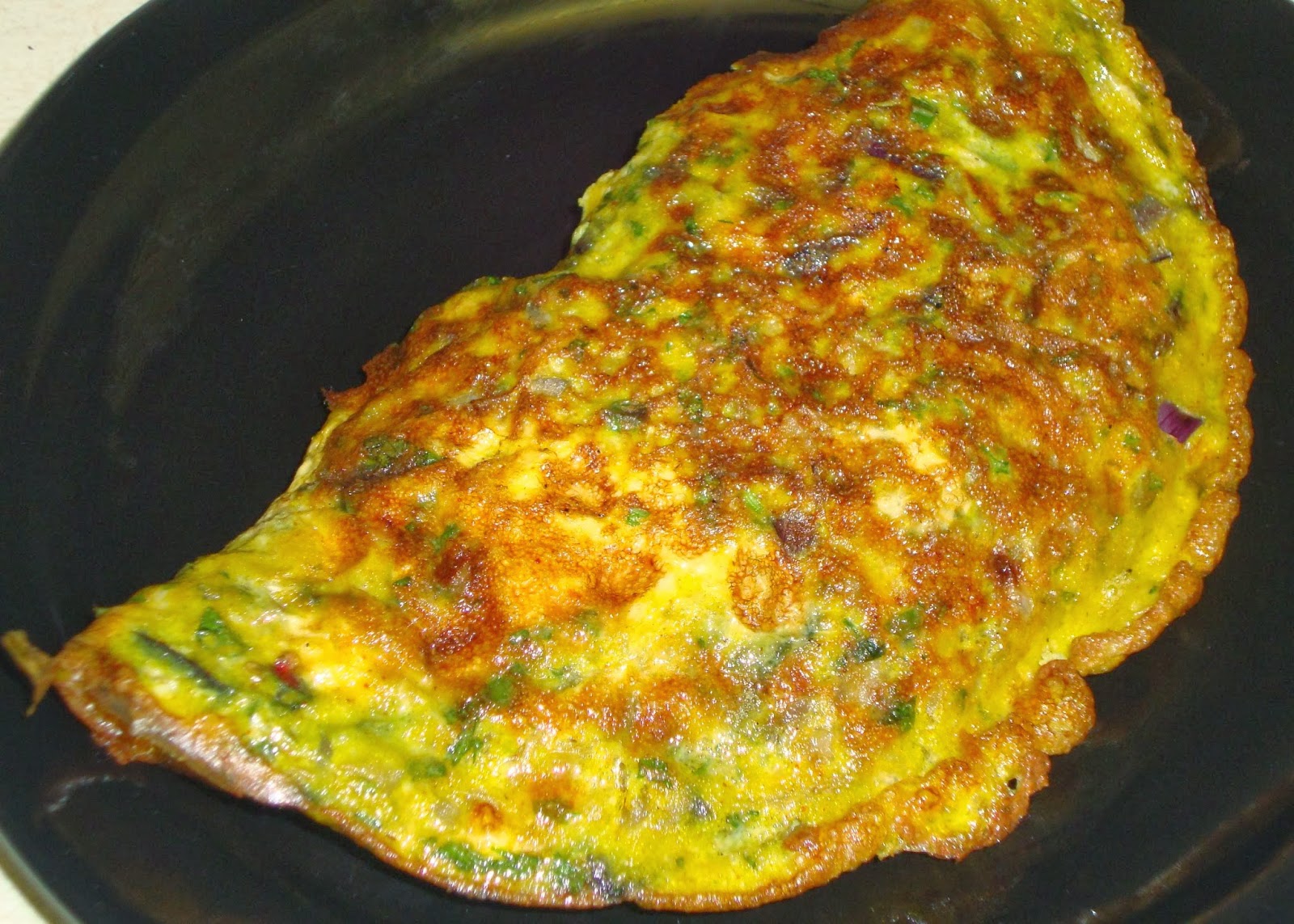
So every Saturday morning, I would cut up some fruit and make omelette sandwiches which would be our picnic brunch on our day trip to the big city. Then loading these boxes into our backpacks along with the drinks, we set out to the Reading Station pushing our toddler who was cushioned up in her stroller.

We ate our omelette sandwiches on the steps of the British museum, on the banks of the Thames as we viewed the comings and goings at the Tower Bridge, outside the Tate Museum, at the gates of Shakespeare’s Globe Theatre, in the gardens of Westminster Abbey, near Trafalgar Square, in the shadow of Big Ben, and numerous other places.

We didn’t have to line up at the fast food centres or wait for our orders to arrive. As our daughter hungrily munched her sandwich, we gazed around and absorbed the essence of this beautiful city.

On the way back, it sometimes rained and we rushed into Marks and Spencer at Reading for tea and cookies which was always a highlight of the day. It gave us a warm moment to discuss all that we had seen and done.
 
 
Here is the recipe of our ‘London Brunch’:
Ingredients:
½ tbsp cooking oil
1 large onion, chopped
1 medium tomato, chopped
2 tsp ginger-garlic paste
1 green chilli, finely chopped (optional)
1 tsp turmeric powder (optional)
Salt and pepper to taste
3 eggs, lightly beaten
¼ tbsp coriander leaves, chopped (optional)
Slices of brown bread
Butter or tomato sauce (optional)
Method:
1.      Heat 1/4 tbsp of oil in a small pan.
2.      Add onion and fry till it becomes golden brown.
3.      Add tomato, ginger-garlic paste, and green chilli. Stir, cover the pan, and cook on low heat for 2 minutes.
4.      Turn off the heat and add turmeric powder, salt and pepper. Mix well and add this mixture to the bowl of beaten eggs. Mix again.
5.      In a non-stick frying pan, heat 1/4 tbsp oil, and spread the egg mixture evenly.
6.      Fry uncovered for 7-8 minutes (or till your kitchen fills up with the omelette aroma).
7.      Flip it over and fry for 4-5 minutes.
8.      Garnish with coriander. Cut into square portions and serve as sandwich fillings in brown bread lined with butter or tomato sauce.
Happy picnicking!